Hotel and Hospitality Innovation Trends 2026
The hospitality industry is shifting faster than most people can process. Hotels are no longer just physical spaces to sleep, they are becoming intelligent ecosystems that respond, predict, and adapt in real time. Every interaction, from booking to checkout, is being redesigned around speed, personalization, and digital fluency.
Travelers are now expecting experiences that feel seamless, almost invisible in execution but deeply impactful in memory. This shift is driven by data, automation, and emotional design working together behind the scenes. Within this transformation, the hotel innovation system 2026 is becoming the structural backbone of how modern hospitality operates, connecting technology, service design, and guest psychology into one continuous experience layer.
Smart Hotel Infrastructure Development
Hotels are no longer static buildings; they are evolving into adaptive digital environments that respond to human behavior in real time. Infrastructure is now being re-engineered to support intelligence at scale, where every system communicates with another to create fluid guest experiences.
Modern properties are embracing smart hospitality trends 2026, where infrastructure is designed not only for efficiency but also for emotional comfort and predictive responsiveness. This evolution is supported by LSI concepts such as IoT-enabled ecosystems, AI-powered property management systems, and intelligent building automation that collectively redefine operational hospitality standards.
IoT enabled room controls
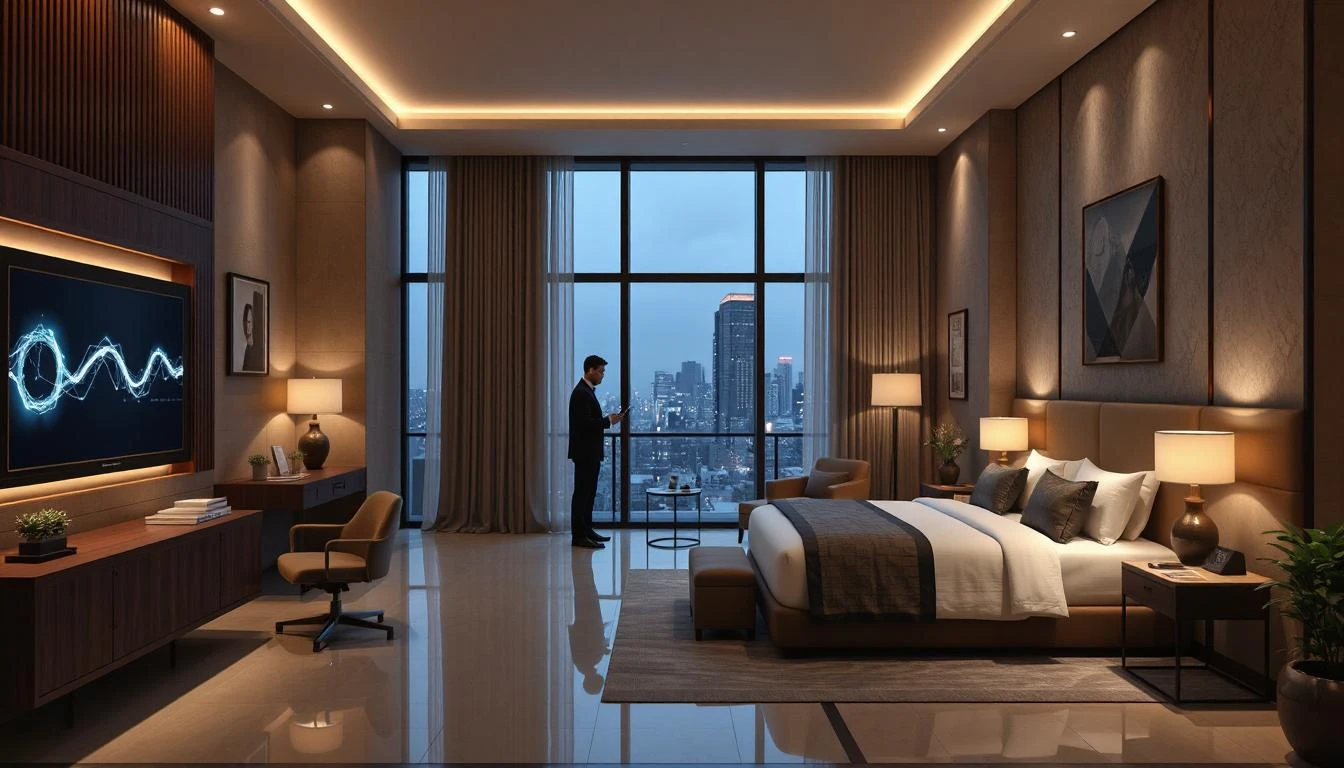
IoT technology is reshaping guest rooms into responsive environments. Lighting adjusts based on circadian rhythms, temperature adapts to personal comfort profiles, and entertainment systems anticipate preferences. These systems reduce friction and elevate comfort into a subconscious experience.
Instead of manual interaction, guests now enter spaces that already “understand” them. Long-tail concepts like automated hotel room personalization using IoT sensors 2026 highlight how deeply embedded this technology has become in modern hospitality architecture.
AI driven hotel operations
Artificial intelligence is now the silent orchestrator behind hotel efficiency. From forecasting occupancy rates to optimizing energy consumption, AI ensures that operations run with precision and minimal waste.
As Bill Carter, hospitality technology strategist, states: “AI in hotels is no longer about automation, it is about anticipation. The property that predicts better wins faster.”
This reflects how predictive analytics, machine learning models, and AI-driven scheduling systems are becoming essential components of modern hotel ecosystems.
Keyless entry systems
Keyless systems are redefining security and convenience. Mobile credentials, biometric recognition, and facial authentication are replacing traditional keycards. This shift reduces friction at check-in while improving security layers significantly.
Guests now move through properties with seamless access, reinforcing the idea that physical barriers should disappear in favor of digital continuity.
Enhanced Guest Personalization
Hospitality is entering a deeply individualistic era where no two guest experiences are the same. Personalization is no longer a feature, it is the foundation of modern service design. Hotels are leveraging behavioral data to anticipate needs before they are expressed.
This evolution aligns closely with hotel innovation system 2026, where predictive intelligence and emotional analytics shape every guest interaction. LSI frameworks such as behavioral segmentation, dynamic pricing intelligence, and sentiment-based service modeling are becoming industry standards.
Data based guest preferences
Hotels now collect and interpret data from multiple touchpoints, booking history, loyalty interactions, and even travel behavior patterns. This allows them to create highly refined guest profiles that evolve over time.
Instead of generic service, guests experience tailored interactions that feel intuitive and natural. Long-tail keywords like how hotels use predictive guest profiling for personalized experiences 2026 describe this emerging precision layer in hospitality.
Customized room experience
Rooms are becoming adaptive environments that shift according to guest identity. From scent diffusion to lighting ambiance, everything can be customized automatically.
A guest who prefers cooler temperatures and soft lighting will find the room already adjusted upon arrival. This level of personalization creates emotional resonance that strengthens brand loyalty.
Predictive service offerings
Predictive systems now allow hotels to offer services before guests request them. Whether it is suggesting a spa session after a long flight or recommending late-night dining options, anticipation is the new form of luxury.
As Dr. Elaine Morrison, hospitality behavioral analyst, notes: “The future of guest satisfaction lies in invisible service, where needs are met before awareness even forms.”
Digital Ecosystem in Hospitality Industry
The hospitality sector is now fully embedded in a connected digital ecosystem where platforms, devices, and services operate in sync. This integration ensures that guest journeys remain continuous across all digital and physical touchpoints.
Within this structure, hotel innovation system 2026 acts as the connective intelligence layer that unifies booking, engagement, and experience delivery into one seamless flow.
Integrated booking platforms
Booking systems are no longer isolated tools; they now function as interconnected networks. Hotels integrate direct websites, online travel agencies, and AI travel assistants into a unified ecosystem.
LSI keywords such as cloud-based hospitality systems and omnichannel reservation engines highlight how deeply digital integration is shaping booking experiences today.
Virtual reality hotel previews
Virtual reality is transforming how guests evaluate accommodations. Instead of relying on static images, travelers can now explore rooms, amenities, and surroundings in immersive detail before booking.
This reduces uncertainty and increases booking confidence, especially for luxury and international travelers who prioritize clarity before commitment.
Mobile first guest engagement
Mobile devices have become the central hub of hospitality interaction. From check-in to concierge services, everything is managed through smartphones.
Long-tail search terms like mobile-first hotel experience design for international travelers 2026 reflect the growing expectation for fully digital guest journeys that eliminate traditional friction points.
Elevate Your Hotel Innovation Strategy Now
The hospitality landscape is accelerating toward full digital convergence. Properties that fail to integrate intelligent systems risk becoming irrelevant in an industry defined by speed, personalization, and predictive capability.
The hotel innovation system 2026 is no longer an experimental framework, it is the operational baseline for competitive hospitality. Hotels that adopt it early gain structural advantages in efficiency, guest satisfaction, and revenue optimization.